

What Is SMS Marketing for E-commerce?
In today's competitive ecommerce landscape, businesses need more than just a website and products to succeed. Building strong relationships with customers and creating direct communication channels have become essential for increasing sales and improving customer retention. One of the most effective ways online stores can connect with their audience is through SMS marketing.
SMS marketing for ecommerce is the process of using text messages to communicate with customers, promote products, share updates, and encourage purchases. Unlike many digital marketing channels where businesses compete for customer attention, SMS allows brands to reach customers directly through a channel they frequently check every day.
For online stores, SMS marketing can be used throughout the entire customer journey, from introducing new products and sending special offers to confirming orders and encouraging repeat purchases. When used correctly, SMS becomes more than a promotional tool; it becomes a powerful communication method that helps businesses create personalized customer experiences.
How SMS Marketing Works
SMS marketing works by allowing businesses to send targeted text messages to customers who have agreed to receive communications. These messages can include promotional offers, product updates, order notifications, reminders, and personalized recommendations.
The process usually starts by collecting customer phone numbers through methods such as:
- Website sign-up forms
- Customer accounts
- Checkout pages
- Special promotions
- Loyalty programs
After customers provide permission to receive messages, businesses can send relevant communications based on customer behavior and preferences.
For example, an ecommerce store can send:
- A discount code to encourage a first purchase
- A reminder about an abandoned cart
- A notification when an order is shipped
- A message about a new product launch
- A special offer for returning customers
One of the biggest advantages of SMS marketing is direct communication. While emails may remain unopened for hours or even days, text messages are usually seen much faster. This makes SMS especially valuable for time-sensitive campaigns such as limited-time offers, flash sales, and important order updates.
SMS marketing is also highly personal compared to traditional advertising methods. Instead of showing the same advertisement to a large audience, businesses can create messages based on customer information and previous interactions.
For example, a clothing ecommerce store can send different messages to customers based on their previous purchases. A customer who previously bought shoes may receive recommendations for related products, while another customer may receive updates about new arrivals in their preferred category.
This level of personalization helps businesses create more meaningful customer relationships and increases the chances of successful conversions.
The main difference between SMS marketing and traditional advertising is the level of direct engagement. Traditional advertising methods such as banners, television ads, or social media promotions depend on customers seeing and interacting with the message. SMS marketing delivers the message directly to the customer's mobile device.
However, successful SMS marketing is not about sending as many messages as possible. Customers value messages that provide real benefits, such as exclusive discounts, useful updates, or personalized recommendations. Businesses that focus on delivering value are more likely to build trust and maintain long-term customer relationships.
Why SMS Marketing Is Important for Online Stores
For ecommerce businesses, customer attention is one of the biggest challenges. Online shoppers are constantly exposed to advertisements, social media content, and competing brands. SMS marketing provides a direct way to reach customers without depending entirely on external platforms.
One of the main benefits of SMS marketing is its high open rate. Customers usually check text messages quickly, making SMS one of the most immediate communication channels available for businesses.
This fast engagement allows ecommerce brands to:
- Promote limited-time offers
- Notify customers about important updates
- Increase website visits
- Encourage abandoned cart recovery
- Drive repeat purchases
Another important advantage is building stronger customer relationships. Ecommerce success is not only about attracting new buyers; it is also about keeping existing customers engaged. SMS helps businesses stay connected with customers after their first purchase and encourage future interactions.
For example, businesses can use SMS to thank customers after a purchase, request feedback, introduce related products, or offer personalized discounts. These small interactions create a better customer experience and increase brand loyalty.
SMS marketing can also directly contribute to higher sales. When customers receive relevant offers at the right time, they are more likely to return to the store and complete a purchase. Automated messages, such as abandoned cart reminders or product recommendations, help businesses recover missed sales opportunities without requiring manual follow-up.
For growing ecommerce businesses, combining SMS marketing with customer management tools creates even better results. By understanding customer behavior, purchase history, and preferences, businesses can send more targeted messages that match customer needs.
With platforms like Webruno, businesses can manage customer relationships, organize ecommerce operations, and create more effective marketing strategies by connecting customer data with business processes.
Ultimately, SMS marketing gives ecommerce businesses a direct, efficient, and personalized way to communicate with customers. When combined with a strong ecommerce platform, it can help increase engagement, improve customer loyalty, and create more opportunities for long-term growth.
Why Ecommerce Businesses Should Use SMS Marketing
For ecommerce businesses, attracting new customers is only the beginning of the growth journey. The real challenge is keeping customers engaged, encouraging repeat purchases, and creating long-term relationships. SMS marketing provides online stores with a direct communication channel that allows businesses to stay connected with customers at every stage of the buying journey.
Unlike many marketing channels where businesses compete for attention, SMS messages reach customers directly on their mobile devices. When used strategically, SMS marketing can improve customer engagement, recover lost sales opportunities, increase repeat purchases, and strengthen brand loyalty.
Increase Customer Engagement
Customer engagement plays a major role in ecommerce success. A customer who interacts regularly with a brand is more likely to remember it, make future purchases, and develop trust over time.
SMS marketing helps businesses maintain continuous communication with customers by delivering useful and relevant messages directly to their phones. Instead of waiting for customers to visit a website or discover a social media post, businesses can proactively reach their audience.
Ecommerce brands can use SMS messages to:
- Share new product launches
- Announce special promotions
- Send personalized recommendations
- Provide order updates
- Invite customers to explore new collections
The key to successful SMS marketing is providing value. Customers are more likely to engage with messages that are helpful, personalized, and relevant to their interests.
For example, an online fashion store can notify customers about a new collection based on their previous purchases. A beauty ecommerce brand can send product recommendations related to items customers have already purchased.
This personalized approach makes customers feel understood and creates a stronger connection between the brand and the buyer.
Recover Abandoned Carts
Cart abandonment is one of the biggest challenges for ecommerce businesses. Many customers add products to their shopping carts but leave the website before completing their purchase.
There can be many reasons for abandoned carts, including:
- Customers getting distracted
- Unexpected costs
- Taking more time to decide
- Forgetting about their selected products
SMS marketing provides an effective way to bring these customers back.
Businesses can send automated reminder messages encouraging customers to complete their purchase. These messages can include:
- A reminder about the products left in the cart
- A limited-time discount
- Free shipping offers
- A direct link back to checkout
A well-timed abandoned cart message can recover potential lost revenue by reminding customers about products they were already interested in.
Because SMS messages are usually viewed quickly, they are especially useful for time-sensitive reminders. Businesses can send a message shortly after abandonment while the customer's interest is still fresh.
Increase Repeat Purchases
Successful ecommerce businesses do not focus only on acquiring new customers. Increasing repeat purchases from existing customers is one of the most effective ways to create sustainable growth.
SMS marketing helps businesses encourage customers to return by sending personalized offers and timely reminders.
Examples include:
- Exclusive discounts for existing customers
- Product recommendations based on previous purchases
- Restock notifications
- Special seasonal promotions
- Loyalty rewards
For example, a customer who purchased skincare products several months ago may receive a reminder when it is likely time to reorder. This creates a convenient experience while increasing the chances of another purchase.
SMS campaigns also help businesses reward loyal customers. Offering special promotions or early access to new products makes customers feel valued and encourages them to continue choosing the same brand.
When combined with customer data and ecommerce insights, SMS marketing becomes even more powerful because businesses can send messages based on real customer behavior rather than generic promotions.
Build Stronger Customer Relationships
Long-term ecommerce growth depends on building relationships, not just completing transactions.
Customers are more likely to stay loyal to brands that communicate with them, understand their needs, and provide valuable experiences. SMS marketing helps businesses create this ongoing connection.
Through regular but meaningful communication, brands can:
- Thank customers after purchases
- Request feedback
- Share helpful information
- Provide personalized offers
- Keep customers informed
This continuous interaction helps transform one-time buyers into returning customers.
However, businesses should avoid sending too many unnecessary messages. Excessive communication can reduce customer trust and lead to unsubscribes. The best SMS strategies focus on quality, relevance, and timing.
When SMS marketing is combined with tools like CRM systems, businesses can better understand customer behavior and create more personalized communication strategies. Platforms like Webruno help businesses organize customer information and improve how they manage customer relationships.
By using SMS marketing effectively, ecommerce businesses can create stronger connections, improve customer satisfaction, and build a foundation for long-term growth.
Types of SMS Marketing Messages for Ecommerce
SMS marketing is not limited to sending promotional offers. Successful ecommerce businesses use different types of text messages throughout the customer journey to improve communication, increase sales, and create better shopping experiences.
Each type of SMS message has a different purpose. Some messages are designed to attract customers and increase purchases, while others focus on improving customer satisfaction, building loyalty, and encouraging repeat business.
Understanding the different types of SMS marketing messages helps ecommerce businesses create more effective campaigns and deliver the right message at the right time.
Promotional SMS Messages
Promotional SMS messages are one of the most common types of ecommerce text marketing. These messages are designed to encourage customers to visit an online store, discover products, and complete purchases.
Businesses use promotional SMS campaigns to announce special offers, seasonal sales, discounts, and new product launches.
Common examples include:
- Limited-time discount offers
- Weekend or seasonal sales
- Exclusive customer promotions
- New product announcements
- Special event campaigns
For example, an online clothing store can send a message informing customers about a new collection launch or a limited-time discount. A beauty ecommerce brand can notify customers about special offers on popular products.
The main advantage of promotional SMS is speed. When businesses launch a campaign, customers can receive the message almost instantly and take action immediately. This makes SMS especially useful for time-sensitive promotions such as flash sales or limited inventory offers.
However, effective promotional messages should focus on value rather than simply encouraging customers to buy. A good SMS should clearly communicate the benefit, create interest, and include a simple action such as visiting the website or using a discount code.
A strong promotional SMS usually includes:
- A clear offer
- A short and engaging message
- A specific call to action
- A reason for customers to act quickly
By creating relevant promotional messages, ecommerce businesses can increase website traffic, improve sales opportunities, and encourage customers to explore more products.
Transactional SMS Messages
Transactional SMS messages are focused on providing important updates about customer actions and orders. Unlike promotional messages, these texts are usually triggered automatically after a customer completes a specific activity.
These messages are an essential part of the ecommerce experience because they keep customers informed and reduce uncertainty after making a purchase.
Common examples of transactional SMS include:
- Order confirmation messages
- Payment successful notifications
- Shipping updates
- Delivery status updates
- Order completion messages
For example, after a customer completes a purchase, an automatic SMS confirmation can reassure them that their order has been successfully received. Later, shipping updates can inform them when their package has been prepared, shipped, or delivered.
These messages improve customer trust because buyers always know what is happening with their orders. A lack of communication after purchase can create anxiety and lead customers to contact support unnecessarily.
Transactional SMS also helps businesses create a more professional customer experience. Instead of manually updating customers about every order, businesses can automate communication and provide instant updates.
For ecommerce stores, transactional messages are not just notifications; they are opportunities to strengthen customer relationships. A simple order confirmation message can include helpful information, customer support details, or a thank-you message that improves the overall experience.
Customer Retention Messages
Customer retention messages focus on keeping existing customers engaged and encouraging them to return to the online store.
While attracting new customers is important, retaining existing customers is often more cost-effective. Customers who have already purchased from a brand are more likely to buy again when they receive relevant and personalized communication.
Retention SMS messages can include:
- Birthday messages
- Personalized recommendations
- Loyalty rewards
- Special offers for returning customers
- Reorder reminders
For example, a customer who purchased a product in the past may receive a personalized recommendation for a related item. A loyal customer may receive an exclusive discount as a reward for previous purchases.
Birthday messages are another effective retention strategy. A simple personalized message with a special offer can make customers feel valued and strengthen their connection with the brand.
Personalization is the key factor in successful retention campaigns. Customers respond better to messages that match their interests and previous interactions rather than generic promotions sent to everyone.
By using customer data, ecommerce businesses can create more targeted SMS campaigns. Information such as previous purchases, browsing behavior, and customer preferences can help businesses deliver more relevant messages.
When SMS marketing is connected with CRM tools, businesses can manage customer relationships more effectively and create automated communication strategies. Platforms like Webruno help businesses organize customer information and improve how they interact with their audience.
Using a combination of promotional, transactional, and retention SMS messages allows ecommerce businesses to communicate with customers throughout the entire buying journey. This creates a better customer experience, increases engagement, and supports long-term business growth.
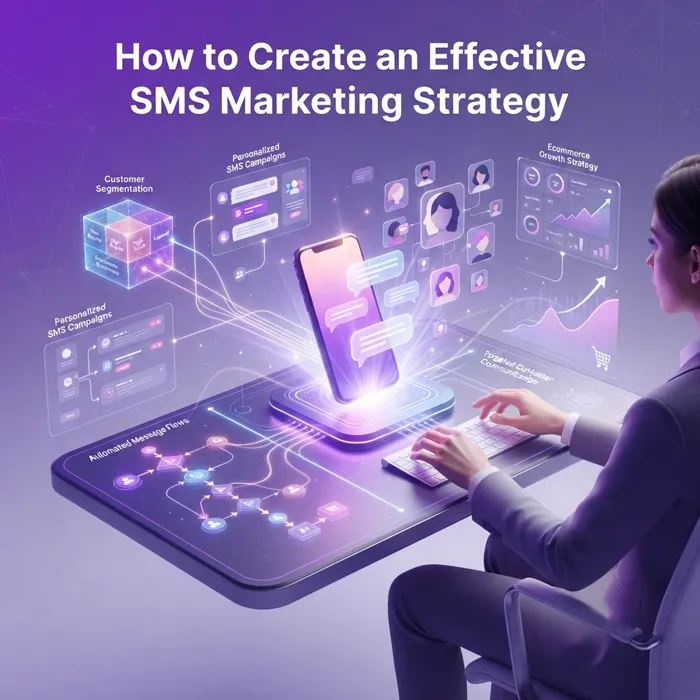
How to Create an Effective SMS Marketing Strategy
A successful SMS marketing campaign is not just about sending messages to customers. Without a clear strategy, frequent or irrelevant messages can reduce customer trust and lead to lower engagement.
An effective ecommerce SMS strategy focuses on sending the right message, to the right customer, at the right time. By building a quality customer list, understanding audience behavior, creating valuable messages, and choosing the correct timing, businesses can turn SMS into a powerful tool for increasing sales and improving customer relationships.
Build Your Customer List
The foundation of every successful SMS marketing campaign is a high-quality customer list. Businesses need customers who have willingly provided their phone numbers and agreed to receive marketing messages.
Collecting customer information without permission can damage trust and create a negative experience. Instead, ecommerce businesses should use transparent methods to encourage customers to subscribe.
Common ways to build an SMS subscriber list include:
- Website signup forms
- Checkout pages
- Account registration
- Loyalty programs
- Exclusive discounts or offers
For example, an online store can offer a small discount to customers who subscribe to receive updates and special promotions. This creates value for the customer while helping the business build a targeted audience.
A quality subscriber list is more valuable than a large but unengaged audience. Customers who are genuinely interested in receiving updates are more likely to open messages, visit the website, and complete purchases.
Businesses should also regularly maintain their contact lists by removing inactive subscribers and respecting customer preferences. This helps improve campaign performance and ensures messages reach the right audience.
Segment Your Audience
Sending the same message to every customer is one of the biggest mistakes in SMS marketing. Customers have different needs, interests, and buying behaviors, so personalized communication usually creates better results.
Audience segmentation allows businesses to divide customers into smaller groups based on specific characteristics and behaviors.
Ecommerce businesses can segment customers based on:
- Previous purchases
- Product interests
- Shopping behavior
- Purchase frequency
- Customer location
For example, a customer who frequently buys skincare products should receive different messages from someone who only purchases clothing items.
Businesses can also create segments for:
- New customers
- Loyal customers
- Customers who have not purchased recently
- Customers who abandoned their carts
This approach helps businesses send more relevant messages instead of generic promotions. Personalized SMS campaigns make customers feel understood and increase the chances of engagement.
When SMS marketing is connected with customer management tools like CRM systems, businesses can easily analyze customer information and create more targeted communication strategies.
Write Short and Valuable Messages
SMS messages have a limited space, so every word needs to provide value. Customers usually do not want to read long promotional texts; they expect quick, clear, and useful information.
An effective ecommerce SMS message should include:
- A clear purpose
- A valuable offer or update
- A simple call to action (CTA)
For example, instead of writing a general message about a sale, businesses should clearly explain the benefit:
"Get 20% off your favorite products this weekend. Shop now."
A strong SMS message should answer the customer's question: "Why should I take action?"
The best SMS campaigns focus on customer value, such as:
- Exclusive discounts
- Early access to products
- Helpful updates
- Personalized recommendations
Businesses should also avoid sending too many promotional messages. Customers are more likely to stay subscribed when every message provides a useful reason to engage.
Choose the Right Timing
Timing has a major impact on SMS marketing success. Even a well-written message may not perform well if it reaches customers at the wrong moment.
Businesses should consider customer habits, time zones, and the purpose of the message before sending campaigns.
For example:
- Promotional messages may work better during shopping hours
- Abandoned cart reminders should be sent shortly after customers leave products behind
- Order updates should be sent immediately after important actions
The frequency of messages is also important. Sending too many texts can frustrate customers, while sending too rarely may cause customers to forget about the brand.
The best strategy is to create a balanced communication schedule based on customer expectations and business goals.
By combining a targeted audience list, personalized messages, valuable offers, and smart timing, ecommerce businesses can create SMS marketing campaigns that increase engagement, encourage repeat purchases, and build stronger relationships with customers. When integrated with platforms like Webruno, businesses can organize customer data and create more efficient marketing workflows to support long-term growth.
SMS Marketing Automation for Ecommerce Growth
As ecommerce businesses grow, managing customer communication manually becomes more difficult. Sending follow-up messages, updating customers about offers, reminding them about abandoned carts, and maintaining regular communication requires time and resources.
This is where SMS marketing automation becomes valuable. Instead of sending every message manually, businesses can create automated workflows that send the right message at the right time based on customer actions and behaviors.
By combining SMS marketing automation with ecommerce tools and customer management systems, businesses can improve efficiency, increase customer engagement, and create more personalized shopping experiences.
Webruno helps businesses simplify their ecommerce operations by bringing website management, customer information, and business processes together in one platform. With smarter customer management, businesses can create more effective communication strategies and build stronger relationships with their customers.
Automate Customer Follow-Ups
Following up with customers is one of the most important parts of ecommerce marketing. However, manually contacting every customer after each interaction is time-consuming and difficult to manage as a business grows.
SMS automation allows businesses to create automatic follow-up messages based on specific customer actions.
Examples include:
- Sending a thank-you message after a purchase
- Reminding customers about abandoned carts
- Informing customers about order updates
- Sending reorder reminders for frequently purchased products
- Following up with customers who have not purchased recently
For example, if a customer adds products to their cart but does not complete the purchase, an automated SMS reminder can encourage them to return and finish the checkout process.
Automation ensures that no customer interaction is missed while reducing the amount of manual work required from business teams. This allows businesses to focus more on improving products, customer experience, and overall growth.
Personalize Customer Communication
Modern customers expect brands to understand their needs and provide relevant experiences. Sending the same message to every customer can reduce engagement, while personalized communication creates stronger connections.
SMS automation makes personalization easier by using customer information such as:
- Previous purchases
- Customer preferences
- Shopping behavior
- Interaction history
For example, an ecommerce store can send a personalized message about a product category a customer has previously shown interest in. A customer who regularly purchases specific products can receive reminders when those items are available again.
Personalized SMS messages help customers feel valued because the communication is based on their relationship with the brand rather than being a generic advertisement.
This approach can improve:
- Customer satisfaction
- Repeat purchases
- Brand loyalty
- Marketing performance
With the right tools, businesses can create automated campaigns that feel personal while still reaching a large number of customers efficiently.
Connect SMS Marketing With CRM
SMS marketing becomes even more powerful when combined with CRM systems. A CRM helps businesses organize customer information, track interactions, and understand customer behavior.
By connecting SMS marketing with CRM, businesses can create smarter communication strategies based on real customer data.
For example, businesses can identify:
- Which customers purchase most frequently
- Which products customers are interested in
- Which customers need re-engagement
- Which offers are more effective
This information allows businesses to send more targeted SMS campaigns instead of relying on random promotions.
Webruno helps businesses manage customer relationships more effectively by combining ecommerce operations with customer management capabilities. By connecting customer data with marketing activities, businesses can create better experiences and improve long-term customer retention.
Using SMS marketing automation together with CRM allows ecommerce businesses to move from simple messaging to intelligent customer communication. Instead of only promoting products, businesses can build meaningful relationships, increase customer loyalty, and create a scalable growth strategy.
Common SMS Marketing Mistakes Ecommerce Businesses Make
SMS marketing can be a powerful tool for ecommerce growth, but using it incorrectly can have the opposite effect. Sending irrelevant messages, contacting customers too frequently, or ignoring customer preferences can reduce engagement and damage the relationship between a brand and its audience.
Many businesses focus only on sending promotional messages and forget that successful SMS marketing is based on trust, relevance, and providing value. Understanding common mistakes helps ecommerce businesses create better campaigns, improve customer satisfaction, and achieve stronger results.
Sending Too Many Messages
One of the most common SMS marketing mistakes is sending too many messages in a short period of time. While customers may appreciate useful updates and special offers, receiving frequent and unnecessary messages can quickly become frustrating.
When businesses overload customers with SMS campaigns, customers may:
- Ignore future messages
- Unsubscribe from the list
- Develop a negative impression of the brand
The goal of SMS marketing is to create valuable communication, not constant advertising. Businesses should focus on sending messages only when they provide a clear benefit for the customer.
A better approach is creating a balanced communication schedule that includes a mix of:
- Important updates
- Exclusive offers
- Personalized recommendations
- Helpful information
Quality is more important than quantity. A few well-timed and relevant messages can create better results than many generic promotions.
Not Personalizing Messages
Customers expect brands to understand their needs. Sending the same SMS message to every customer can make communication feel impersonal and reduce engagement.
For example, a customer who previously purchased skincare products may not be interested in receiving promotions about unrelated categories. Personalized messages are more likely to capture attention because they match customer interests and behavior.
Businesses can personalize SMS campaigns using information such as:
- Previous purchases
- Customer preferences
- Browsing behavior
- Order history
Personalization helps create a better customer experience and makes customers feel that the brand understands their needs.
Using customer management tools and CRM systems allows businesses to organize customer data and create more relevant SMS campaigns based on real customer information.
Ignoring Customer Preferences
Every customer has different communication preferences. Some customers may want promotional offers, while others may only want important order updates.
Ignoring these preferences can lead to lower engagement and customer frustration.
Businesses should respect customer choices by allowing them to:
- Choose the type of messages they receive
- Control communication frequency
- Easily unsubscribe when needed
Respecting customer preferences builds trust and shows that the brand values the customer relationship.
A successful SMS strategy is based on permission and transparency. Customers should feel that they receive messages because they are useful, not because they are being constantly targeted.
Sending Without Clear Value
Every SMS message should have a clear purpose. One of the biggest mistakes businesses make is sending messages that do not provide any real benefit to customers.
Before sending an SMS campaign, businesses should ask:
"Why would the customer care about this message?"
A valuable message may include:
- A special discount
- Early access to a new product
- Important order information
- Personalized recommendations
- Useful reminders
Messages that only promote products without offering value are less likely to create engagement.
Customers are more willing to interact with brands that respect their time and provide meaningful communication.
Not Tracking Results
Without measuring performance, businesses cannot understand whether their SMS marketing campaigns are successful.
Many ecommerce businesses send messages but fail to analyze important metrics such as:
- Open and engagement rates
- Click-through rates
- Conversion rates
- Customer responses
- Unsubscribe rates
Tracking results helps businesses identify what works and improve future campaigns.
For example, a business may discover that personalized messages generate more sales than general promotions. This insight can help create more effective marketing strategies.
By monitoring campaign performance and using customer data, ecommerce businesses can continuously improve their SMS marketing efforts.
When combined with tools like Webruno, businesses can better organize customer information, understand customer behavior, and create smarter communication workflows. Avoiding these common mistakes helps businesses use SMS marketing as a long-term growth strategy rather than just a short-term sales tool.
SMS Marketing vs Email Marketing: Which Is Better for Ecommerce?
When building an ecommerce marketing strategy, businesses often compare SMS marketing and email marketing to understand which channel can deliver better results. Both methods help brands communicate with customers, promote products, and increase sales, but they work in different ways.
SMS marketing focuses on fast, direct communication, while email marketing is better for longer and more detailed content. Instead of choosing only one channel, successful ecommerce businesses often combine both to create a complete customer communication strategy.
The best approach depends on the business goal, customer behavior, and type of message being delivered.
SMS Marketing
SMS marketing allows businesses to send short text messages directly to customers' mobile devices. Because people usually check text messages quickly, SMS is one of the fastest ways to reach customers.
Advantages of SMS Marketing
Fast Communication
One of the biggest advantages of SMS marketing is speed. Messages are delivered almost instantly, making SMS a great choice for urgent updates, limited-time offers, and time-sensitive campaigns.
Examples include:
- Flash sales
- Discount reminders
- Order updates
- Restock notifications
When businesses need customers to take action quickly, SMS can be more effective than slower communication channels.
High Visibility Rate
SMS messages usually have a high visibility rate because customers frequently check their mobile phones throughout the day.
Unlike emails that may remain unopened in crowded inboxes, text messages are often viewed shortly after delivery. This makes SMS especially valuable for ecommerce businesses that want customers to notice important updates or special offers.
Direct Customer Communication
SMS creates a direct connection between businesses and customers. Instead of depending on customers discovering content through websites, search engines, or social media platforms, brands can communicate directly with their audience.
This direct communication helps businesses:
- Build stronger relationships
- Send personalized offers
- Increase repeat purchases
- Improve customer engagement
For example, an online store can send a personalized discount to a customer based on their previous purchase behavior.
Email Marketing
Email marketing is another powerful ecommerce communication channel that allows businesses to send detailed messages, newsletters, promotions, and educational content.
While SMS focuses on short and immediate communication, email provides more space for storytelling and deeper customer engagement.
Advantages of Email Marketing
Suitable for Long-Form Content
Email marketing is ideal for sharing detailed information that cannot fit into a short SMS message.
Businesses can use emails for:
- Product guides
- Brand stories
- Educational content
- Detailed promotions
- New collection announcements
For example, an ecommerce brand can send an email introducing a new product line with multiple images, product descriptions, customer reviews, and purchase links.
Supports Large Marketing Campaigns
Email marketing works well for large-scale campaigns where businesses want to reach many customers with detailed information.
Companies can create campaigns for:
- Seasonal promotions
- Product launches
- Newsletters
- Customer education
Email also provides more flexibility for designing branded content and creating visually engaging experiences.
Why Ecommerce Businesses Should Use Both SMS and Email Marketing
Instead of viewing SMS and email marketing as competitors, businesses should see them as complementary tools.
SMS is ideal for quick and urgent communication, while email is better for detailed information and long-term engagement.
For example:
- Send an SMS reminder about an abandoned cart
- Follow up with an email containing product recommendations
- Use SMS for a limited-time discount
- Use email for a detailed product announcement
By combining both channels, businesses can communicate with customers at different stages of the buying journey.
A customer may discover a product through email, receive an SMS reminder, complete a purchase, and later receive personalized recommendations through both channels.
This multi-channel approach creates a stronger customer experience and increases opportunities for engagement.
With platforms like Webruno, businesses can better organize customer information and create more effective marketing strategies by understanding customer behavior and managing communication more efficiently.
Ultimately, the best ecommerce marketing strategy is not about choosing between SMS or email. It is about using each channel for what it does best.
SMS creates fast and direct customer connections.
Email builds deeper engagement through detailed content.
When combined, these channels help ecommerce businesses increase sales, improve customer loyalty, and create stronger relationships with their audience.
How Webruno Helps Businesses Improve Customer Communication
Effective customer communication is one of the most important factors in ecommerce growth. As businesses grow, managing customer conversations, tracking interactions, and sending personalized messages become more challenging.
Many ecommerce businesses struggle with scattered customer information, manual follow-ups, and disconnected marketing tools. Without a structured system, businesses may miss sales opportunities, fail to understand customer needs, and provide inconsistent experiences.
Webruno helps businesses simplify customer communication by bringing essential business tools together in one platform. By combining website building, customer management, and business automation features, Webruno allows businesses to create better customer experiences and build stronger relationships.
Manage Customer Data Easily
Customer data is one of the most valuable assets for any ecommerce business. Information such as purchase history, customer preferences, and previous interactions helps businesses understand their audience and create more relevant communication.
However, many businesses store customer information across different tools, spreadsheets, or separate platforms. This makes it difficult to access accurate information and create personalized marketing campaigns.
Webruno helps businesses organize customer information more efficiently by providing better visibility into customer interactions and business activities.
With organized customer data, businesses can:
- Understand customer behavior
- Track previous purchases
- Identify valuable customers
- Create more personalized experiences
Having centralized customer information allows businesses to move beyond basic transactions and create meaningful relationships with customers.
Create Better Marketing Campaigns
Successful marketing is not only about reaching more people; it is about delivering the right message to the right customer at the right time.
With better access to customer insights, businesses can create more targeted marketing campaigns instead of sending generic messages to everyone.
For example, businesses can create campaigns based on:
- Customer purchase history
- Product interests
- Customer engagement
- Previous interactions
Personalized campaigns can improve customer engagement and increase the chances of repeat purchases.
Webruno supports businesses by helping them manage their online presence and create a stronger foundation for ecommerce growth through its powerful website builder capabilities.
A professional website combined with organized customer communication allows businesses to attract visitors, convert them into customers, and continue building relationships after the purchase.
Use CRM for Customer Growth
Managing customer relationships becomes more important as a business grows. A CRM system helps businesses organize customer information, track interactions, and improve communication strategies.
With a dedicated CRM Software solution, businesses can better understand their customers and create more effective engagement strategies.
CRM helps businesses:
- Store customer information
- Track customer interactions
- Identify loyal customers
- Improve follow-up processes
- Create personalized communication
Instead of treating every customer the same, businesses can use CRM insights to provide experiences that match customer needs and preferences.
For ecommerce businesses, CRM is not only a management tool; it is a growth tool. By understanding customer behavior, businesses can increase retention, encourage repeat purchases, and create stronger customer loyalty.
Automate Business Processes
As ecommerce operations expand, manual tasks can take valuable time away from business growth. Sending follow-up messages, managing customer updates, and organizing repetitive tasks manually can become inefficient.
Automation helps businesses save time and maintain consistent communication with customers.
Examples of automated processes include:
- Customer follow-up messages
- Order updates
- Marketing reminders
- Customer engagement workflows
By automating repetitive activities, businesses can focus more on strategy, product development, and improving customer experiences.
Webruno provides an all-in-one approach that helps businesses manage their website, customers, and daily operations more efficiently. Instead of using multiple disconnected tools, businesses can create a more organized workflow and improve communication across the customer journey.
A strong ecommerce strategy requires more than selling products. Businesses need the ability to attract customers, understand their needs, and maintain long-term relationships.
With Webruno’s combination of Website Builder and CRM capabilities, businesses can create professional online experiences, manage customer relationships, and build a scalable foundation for future growth.
Frequently Asked Questions
What is SMS marketing in ecommerce?
SMS marketing in ecommerce is the practice of using text messages to communicate with customers, promote products, share updates, and encourage purchases. Online stores use SMS marketing to send different types of messages, including promotional offers, order notifications, abandoned cart reminders, and personalized recommendations.
Unlike traditional advertising methods, SMS marketing creates a direct communication channel between businesses and customers. Because messages are delivered directly to customers' mobile devices, ecommerce brands can reach their audience quickly and create more personalized experiences.
How can SMS increase online sales?
SMS marketing can increase online sales by helping businesses communicate with customers at the right time. Online stores can use SMS messages to promote special offers, remind customers about abandoned carts, announce new products, and encourage repeat purchases.
For example, an abandoned cart SMS can remind customers about products they left behind and encourage them to complete their purchase. Personalized promotions can also motivate previous customers to return and buy again.
When SMS marketing is combined with customer data and automation tools, businesses can create more relevant campaigns that improve conversion rates and increase revenue opportunities.
Is SMS marketing effective for small businesses?
Yes, SMS marketing can be highly effective for small businesses because it provides a simple and direct way to communicate with customers without requiring large marketing budgets.
Small businesses can use SMS to:
- Promote new products
- Share special discounts
- Build customer relationships
- Increase repeat purchases
- Keep customers engaged
Because SMS does not require complex technical knowledge, it is accessible for businesses of different sizes. With the right strategy, even small ecommerce stores can use SMS marketing to compete with larger brands and create stronger customer connections.
How often should ecommerce businesses send SMS?
The ideal SMS frequency depends on the business type, customer expectations, and the purpose of the messages. Sending too many messages can frustrate customers, while sending too few may reduce engagement.
Ecommerce businesses should focus on sending valuable messages rather than increasing the number of messages.
Good practices include:
- Sending promotional messages only when they provide real value
- Using automation for important updates
- Personalizing messages based on customer behavior
- Respecting customer communication preferences
The goal is to create useful communication that customers appreciate, not messages that feel like unwanted advertising.
Can Webruno help automate customer communication?
Yes, Webruno helps businesses improve customer communication by providing tools that support website management, customer organization, and business growth.
With Webruno, businesses can better manage customer information, organize ecommerce operations, and create more efficient communication processes.
By combining website capabilities with customer management features, businesses can improve follow-ups, understand customer behavior, and create better experiences throughout the customer journey.
Automation helps businesses save time, reduce manual tasks, and focus on building stronger relationships with customers while growing their ecommerce operations.
Final Thoughts: Grow Ecommerce Sales With SMS Marketing
In the competitive ecommerce world, building strong customer relationships is just as important as attracting new visitors. Customers expect brands to provide fast, personalized, and valuable communication throughout their shopping journey.
SMS creates direct customer connections.
Unlike many marketing channels where businesses compete for attention, SMS allows brands to communicate directly with customers through a channel they use every day. From promotional offers and product updates to order notifications and personalized recommendations, SMS marketing helps businesses stay connected with their audience and create better customer experiences.
However, successful SMS marketing is not only about sending messages. The real value comes from using customer insights, automation, and personalization to deliver the right message at the right time.
Automation creates scalable growth.
As ecommerce businesses grow, managing customer communication manually becomes more difficult. Automated workflows help businesses save time, improve follow-ups, and maintain consistent communication without increasing workload.
With the right tools, businesses can automate customer reminders, improve retention campaigns, recover abandoned carts, and create personalized experiences that encourage repeat purchases.
Webruno helps businesses create a stronger foundation for ecommerce growth by combining website management, customer organization, and business automation. With Webruno, businesses can:
- Manage customer information more effectively
- Automate communication processes
- Improve customer relationships
- Create better marketing strategies
- Increase sales opportunities
By connecting customer data with business operations, Webruno helps businesses move beyond simple transactions and build long-term relationships with their customers.
SMS marketing becomes even more powerful when supported by a complete ecommerce platform. Businesses that combine direct communication, automation, and customer insights can create better experiences and achieve sustainable growth.
Ready to build stronger customer relationships? Grow your ecommerce business with Webruno today.