

How AI Is Revolutionizing Website Building in 2026 (Complete Guide for Business Owners)
A few years ago, building a website meant one of two paths: pay a developer thousands of dollars and wait weeks, or wrestle with a drag-and-drop builder yourself and hope the result looked halfway professional. In 2026, there's a third option that's quietly become the default for a lot of small and mid-sized businesses AI doing a meaningful chunk of the heavy lifting, from layout suggestions to copywriting to ongoing optimization, while a human still makes the actual decisions.
This isn't a hype piece about robots taking over web design. It's a practical look at what AI actually does well in website building right now, where it still falls short, and how a business owner with no coding background can use it to end up with a site that genuinely performs not just one that was fast to build.
Why This Shift Is Happening Now
Website builders have been around for over a decade, and for most of that time, "no-code" still meant hours of dragging blocks around, second-guessing color choices, and writing copy from scratch. What's changed isn't the idea of a builder it's how much of that manual work AI can now handle competently. Layout suggestions that actually make sense for the content. Copy drafts that need editing rather than complete rewriting. Image and color palette recommendations based on the industry a business is actually in.
None of this replaces good judgment. But it removes the blank-page problem that used to be the biggest barrier for someone starting from zero, which is a big part of why the gap between "professional agency site" and "small business builder site" has narrowed so much. It's worth looking at how these shifts fit into the broader picture of modern web design trends shaping the industry in 2026 to see how AI is just one piece of a larger pattern.
Where AI Actually Helps Right Now
Getting Past the Blank Page
The single biggest practical benefit of AI in website building is that nobody has to start from nothing anymore. Describe the business a bakery, a plumbing company, a consulting firm and a reasonable starting layout, section structure, and even placeholder copy can be generated in seconds. It's not the finished product, but it's a real starting point instead of a blank canvas that used to paralyze people for hours.
Writing Copy That Doesn't Sound Like a Template
Early AI-generated website copy had a reputation for sounding generic, and that reputation was earned. The tools available now are noticeably better at producing copy that sounds like it was actually written for a specific business rather than swapped in from a template library. It still needs a human pass AI doesn't know a business's actual voice, its real differentiators, or the specific details that make copy convincing rather than just correct but the starting draft is miles ahead of where it was even two years ago.
Design Suggestions That Actually Fit the Content
Rather than picking a template and forcing content to fit it, AI-assisted tools increasingly work the other way around suggesting layout and design choices based on what's actually being put on the page. A photography portfolio gets recommendations built around large visuals; a service business gets recommendations built around clear calls to action and trust signals. This kind of context-aware suggestion used to require an actual designer's judgment call.
SEO Groundwork Handled Automatically
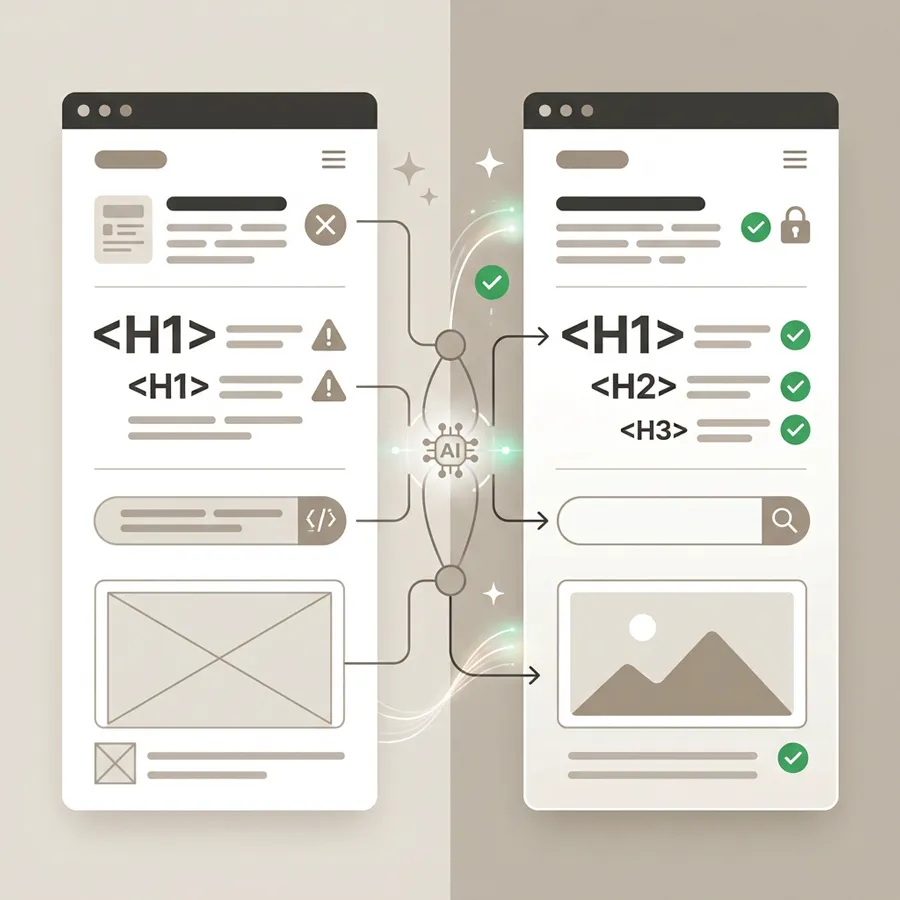
A lot of the technical SEO fundamentals clean heading structure, reasonable meta descriptions, sensible URL slugs, image alt text can now be handled automatically as a site is built, rather than bolted on afterward by someone who remembers to do it. That doesn't mean SEO is fully solved by AI; it means the baseline is higher by default, which matters a lot for business owners who wouldn't otherwise think about any of this. It's a fair question whether a builder-generated foundation is actually enough on its own, and this look at whether a website builder can genuinely handle SEO well goes into where the limits still are.
Where AI Still Falls Short
It's worth being honest about the limits, because overselling this stuff is exactly what erodes trust in it. AI is genuinely bad at understanding a business's actual competitive positioning it can write plausible copy about "quality service" and "customer satisfaction," but it doesn't know what specifically makes one plumbing company different from the one down the street. That still requires a human who actually knows the business.
It also struggles with taste in the way a skilled designer doesn't. AI-suggested layouts tend toward safe, competent, slightly generic choices which is fine for a baseline, but a business that wants to stand out visually still benefits from a human eye making final calls rather than accepting every AI suggestion at face value.
And AI can't actually understand your customers the way market research and real conversations can. It can pattern-match against what's worked elsewhere, but it doesn't know what your specific audience responds to until you tell it, or until the data comes back after launch.
AI-Assisted vs. Fully Custom: Which Actually Makes Sense
This is the question that comes up constantly, and the honest answer is that it depends heavily on what the business actually needs. An AI-assisted builder gets a professional-looking, functional site live fast, at a fraction of the cost of custom development, and increasingly with genuinely good design instincts baked in. A fully custom build still wins when a business needs something a template genuinely can't do deep technical integrations, a completely unique visual identity, or functionality that doesn't exist in any builder's toolkit. For most small and mid-sized businesses, the AI-assisted route covers what's actually needed; for a smaller number with more complex demands, it doesn't. This comparison of an AI-assisted builder against a fully custom build breaks down exactly where that line tends to fall.
What This Actually Looks Like in Practice
Picture a small business owner say, someone opening a local bakery sitting down to build a site for the first time. They describe the business in a sentence or two. Within minutes, they have a homepage structure, a menu page, an about section, and a contact page, all with draft copy and a layout that doesn't look like it was thrown together at random. From there, the actual work is editing: swapping in real photos, fixing details the AI got wrong, adjusting tone until it sounds like an actual person rather than a description of a bakery.
That's a fundamentally different starting point than five years ago, when the same person would have been staring at an empty template wondering where to even begin. The tools have gotten good enough that the hardest part of building a website starting has mostly been solved. The remaining work is refinement, not creation from scratch.
Choosing Tools That Actually Deliver on This
Not every platform that claims "AI-powered" delivers the same experience. Some genuinely integrate AI into the design and copy process; others just bolt an AI chatbot onto an otherwise unchanged builder. It's worth looking past the marketing language and checking what a tool actually does does it generate a real starting layout based on your business, or just offer generic suggestions after the fact? A broader look at the most popular website design tools available today is useful context before settling on one, since the landscape shifts quickly and not every tool ages equally well.
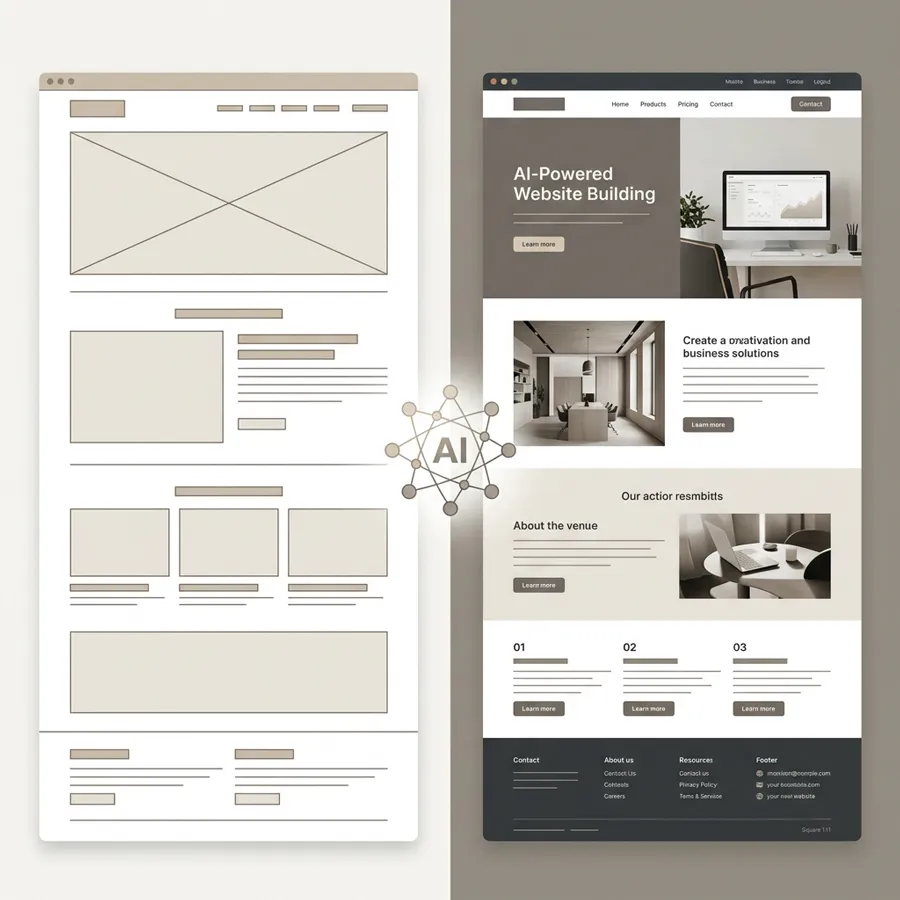
An AI-assisted website builder that handles layout, copy suggestions, and technical SEO groundwork together tends to save the most time, since those three pieces used to require separate tools or separate people entirely.
A Realistic First Attempt
For anyone wanting to see this in action rather than just read about it, walking through an actual build end to end tends to make the whole picture clearer than any explanation. This step-by-step walkthrough of building a website with Webruno shows what the process genuinely looks like from an empty account to a live site including the parts where AI suggestions get accepted, edited, or thrown out entirely.
What to Actually Expect Going Forward
The trajectory here is fairly clear even if the exact pace is hard to predict. AI suggestions will keep getting more specific and less generic as the underlying models improve and as tools get better at incorporating real business data rather than generic templates. Personalization showing different visitors different content based on how they arrived at a site is moving from a nice-to-have into something builders increasingly offer by default. And the line between "website builder" and "marketing platform" keeps blurring, since AI makes it easier to bundle design, copy, and basic analytics into one tool rather than three.
None of that means human judgment becomes less important. If anything, it means the judgment calls that matter brand voice, what makes a business genuinely different, which trade-offs are worth making become the actual bottleneck, since the mechanical parts of building a site keep getting handled automatically.
Getting Started Without Overthinking It
The businesses getting the most out of AI-assisted website building right now aren't the ones treating it as magic they're the ones treating it as a genuinely good starting point that still needs a human pass before launch. Describe the business honestly, accept the suggestions that make sense, override the ones that don't, and spend the saved time on the parts that actually require a human real photos, real specifics, real proof that this business is worth trusting.
If it's time to actually build something rather than keep reading about the theory, it's worth comparing what's included across Webruno's plans before deciding where to start since the right starting point depends more on what the business actually needs than on which platform has the flashiest AI demo.